How to track your child's reading progress at home
“Is my child reading better than last month?” It's a simple question, and without notes it's surprisingly hard to answer. Day to day, progress is too slow to notice. Over a few weeks it adds up, but only if something keeps a record. Sowa does that for you: every time your child reads aloud, you get the recording, a few numbers about how they read, and a short quiz showing what they understood. Here's how to use them to see real progress, without turning reading into a test.
What gets recorded
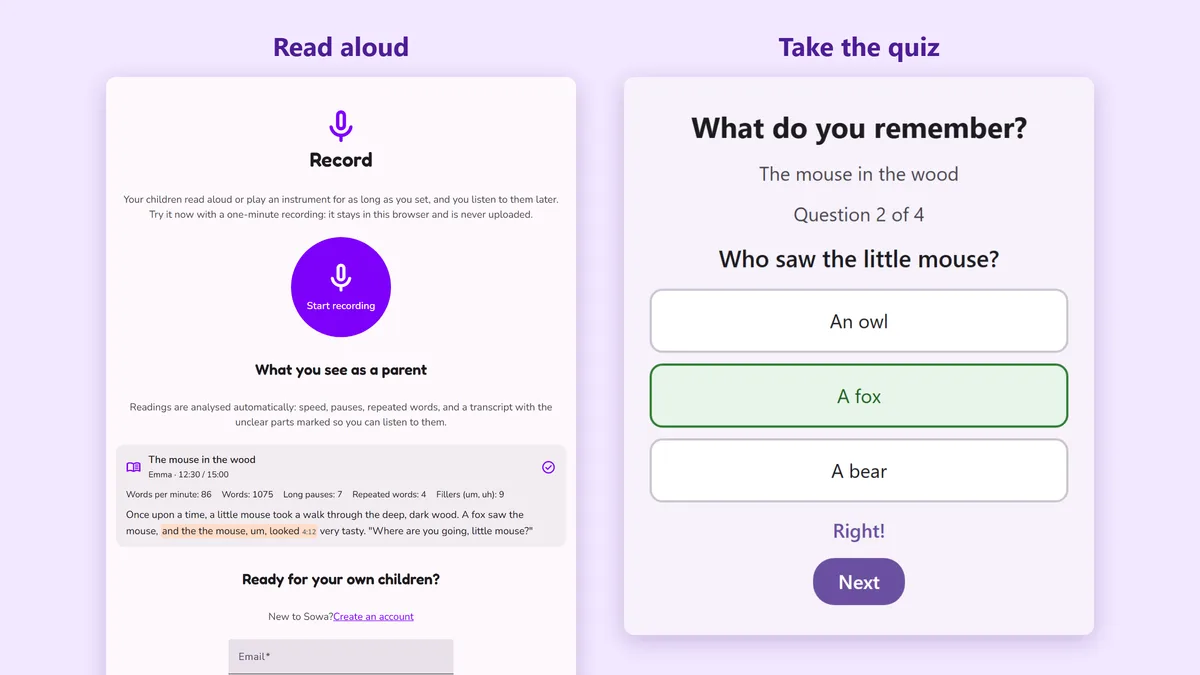
With a free parent account, your child reads any book aloud on the Record page, from the library, from school or from home. The setup and the quiz are explained step by step in Reading aloud with Sowa: record, listen back and take a quiz. This guide is about what comes after: reading the results as a parent.
Open Record with no child active (on the child's device, press I'm the parent and enter your password). Each reading shows its title, its date and how long it lasted against the goal you set, with a tick when the goal was reached. Under it you find:
- Words per minute and the number of words read.
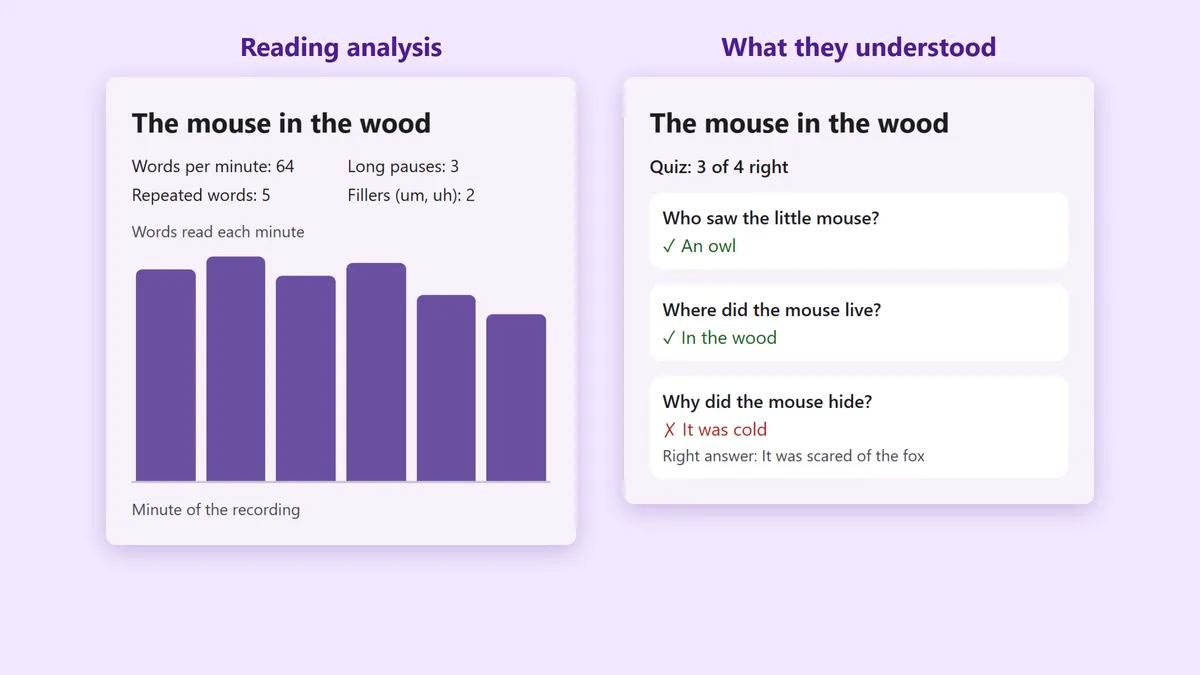
- Words read each minute: a small chart with one bar per minute of the recording.
- Long pauses, repeated words and fillers (um, uh).
- The transcript, with the parts that were hard to understand highlighted, so you can listen to just those.
- The quiz score, for example Quiz: 3 of 4 right, and under Quiz answers each question with your child's answer and the right one.
Fluency: how smoothly they read
Words per minute is the number most parents look at first, and it's a good one, as long as you read it the right way:
- Look at weeks, not days. A tired evening or a hard chapter can lower the number by a lot. The trend over three or four weeks is what counts.
- Compare similar books. A picture book and a chapter book with long words give very different numbers. When you compare, pick readings of the same kind of book.
- Compare your child with themselves. Children learn to read at very different speeds. Steady growth matters more than any number on its own.
The words read each minute chart shows reading stamina. Bars that stay level mean your child kept the same pace all the way through. Bars that drop near the end mean they got tired. That's normal for a beginner, and it's a hint to keep the goal short for now, or to allow a pause halfway. Over the weeks, the bars should stay high for longer.
Long pauses usually show where a word was hard to decode. When the same book or the same kind of word comes up again, there should be fewer of them. Repeated words aren't always bad: going back to fix a word is what good readers do. A lot of fillers can mean the text is a bit too hard, or that your child is nervous about being recorded. Both get better with practice.
Comprehension: what they understood
Reading fast isn't the same as reading well. The quiz written from each reading shows whether the story actually went in: who was in it, what happened, why, and how it ended. Open Quiz answers to see which questions went wrong.
- Fast reading, low quiz scores: your child may be racing through the words. Praise slower reading, and ask them to tell you the story in their own words when they finish.
- Slow reading, good quiz scores: they understand what they read, and speed will come with practice. Don't push for speed yet.
- The same kind of question goes wrong: if it's often the “why” questions, talk about reasons while you read together: “Why do you think the fox did that?”
Each quiz is taken once, right after the reading, so the score shows what stuck the first time, not what was guessed on a second try.
Habits: the calendar
The biggest predictor of progress is simply reading often. The Calendar shows a week or a month at a time, with your children's readings and finished worksheets on the days they happened. Pick one child at the top, or everyone. A glance at the month shows whether reading is a daily habit or a once-a-week rush, and that's usually the first thing to fix.
Printed worksheets count too: when your child presses I finished it! on a worksheet page and takes a photo of the sheet, it appears in the calendar on that day. For a dictation worksheet, the photo is also checked against the text: you see how many words were right, and each mistake is marked as spelling, capital letter, punctuation, left out or not in the text.
A five-minute weekly check
- Open the Calendar and count the days with a reading this week.
- Write the week's words per minute in a notebook, one line a week. After a month you'll have a real trend to look at.
- Open one reading's chart and see whether the bars still drop at the end.
- Pick one wrong quiz answer and look for it in the book together.
- Change one thing for next week, no more: a slightly longer goal, a slightly harder book, or a fixed reading time before dinner.
Keep it encouraging
The numbers are for you, not for your child. Only the parent's view shows the analysis, and it's a guide, not a grade: it doesn't know the book's text, so it can't count misread words. Celebrate the effort (“Ten minutes, every day this week!”) and keep the comparisons to yourself. A child who enjoys reading will improve, and a child who feels measured may stop wanting to read aloud.
If a reading was very quiet, the list says so: the analysis may have missed words. Next time, sit your child close to the microphone in a quiet room.
Privacy
Recordings, photos and results are only available to your account. These pages aren't shown in search engines and have no ads or analytics. To make the analysis and the quiz, the recording is sent to a speech-recognition service and its text to an AI model, without your child's name. Removing a child deletes their recordings and photos. More in our privacy policy.
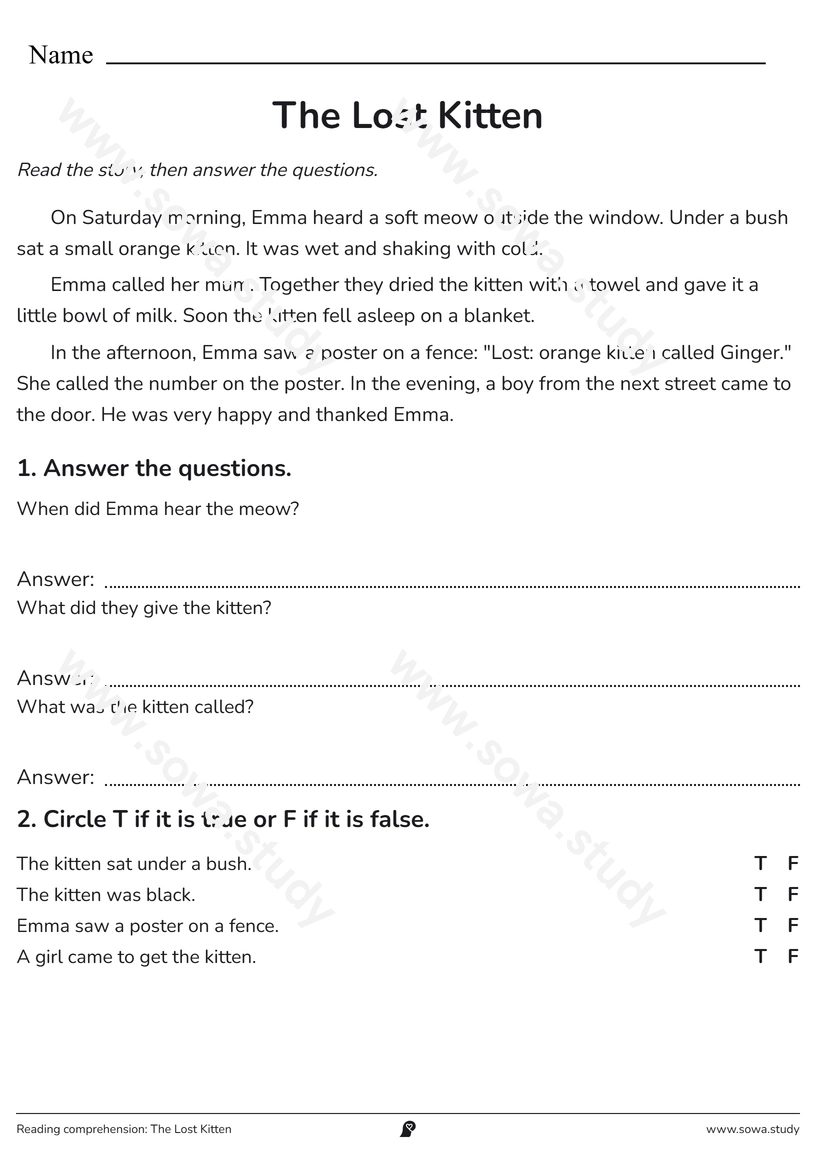
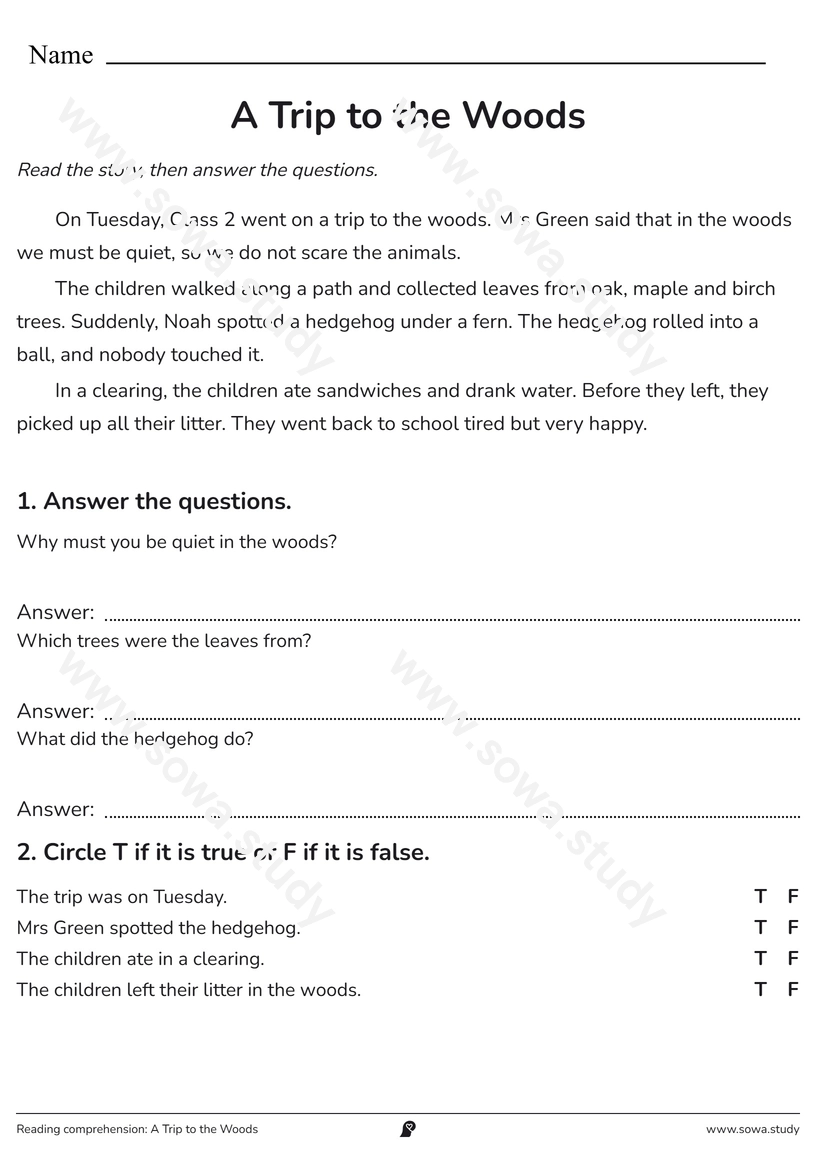
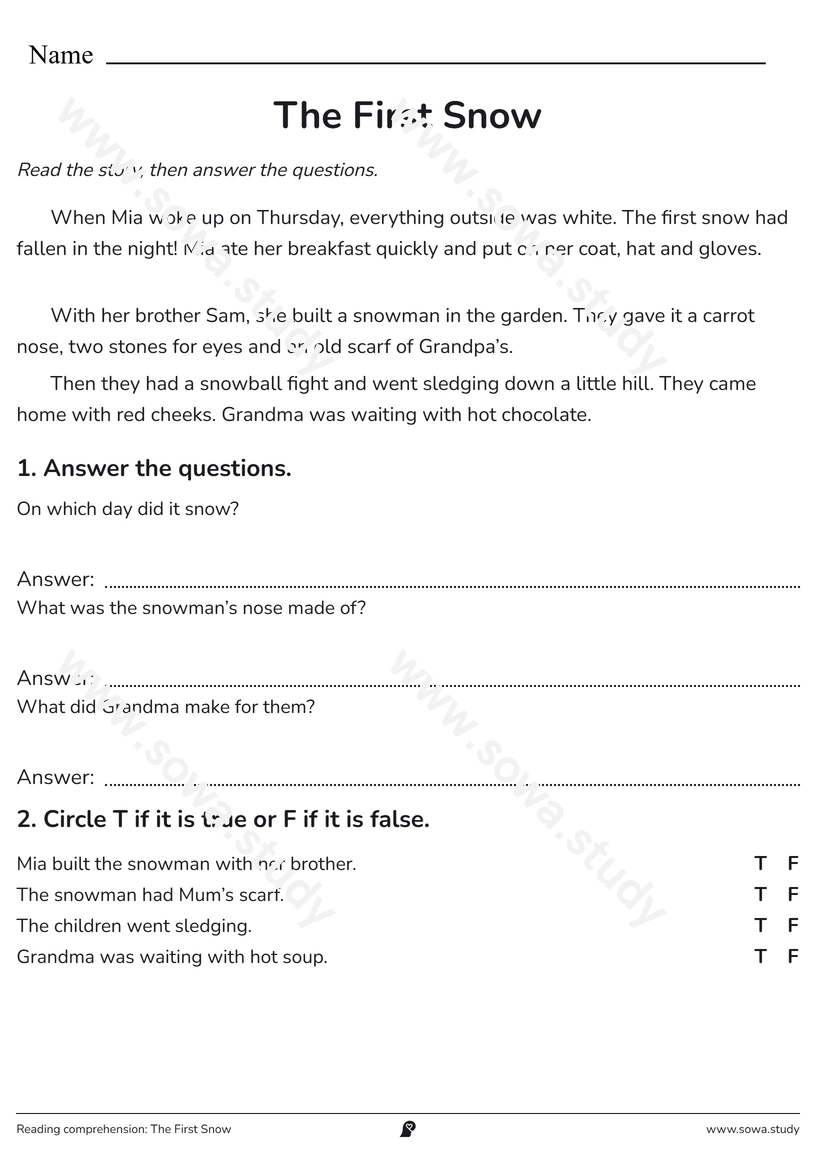
Not signed up yet? Try a one-minute recording on the Reading practice page: it stays in your browser and is never uploaded. For practice on paper, the reading comprehension worksheets below have a short story and questions.