Different ways to subtract: 4 mental math strategies and the most common mistake
Mental subtraction trips children up more than adding does, because one popular strategy stops working as soon as the ones need regrouping. Here are the four strategies grade 3–4 textbooks teach, when each one is easiest, and the mistake to look out for on your child's tests.
First, the words
In 9 − 2 = 7, 9 is the number you start with (the minuend), 2 is the number taken away (the subtrahend) and 7 is the difference. Every subtraction can be checked by adding: 7 + 2 = 9. That check is worth making a habit.
1. Tens and ones separately
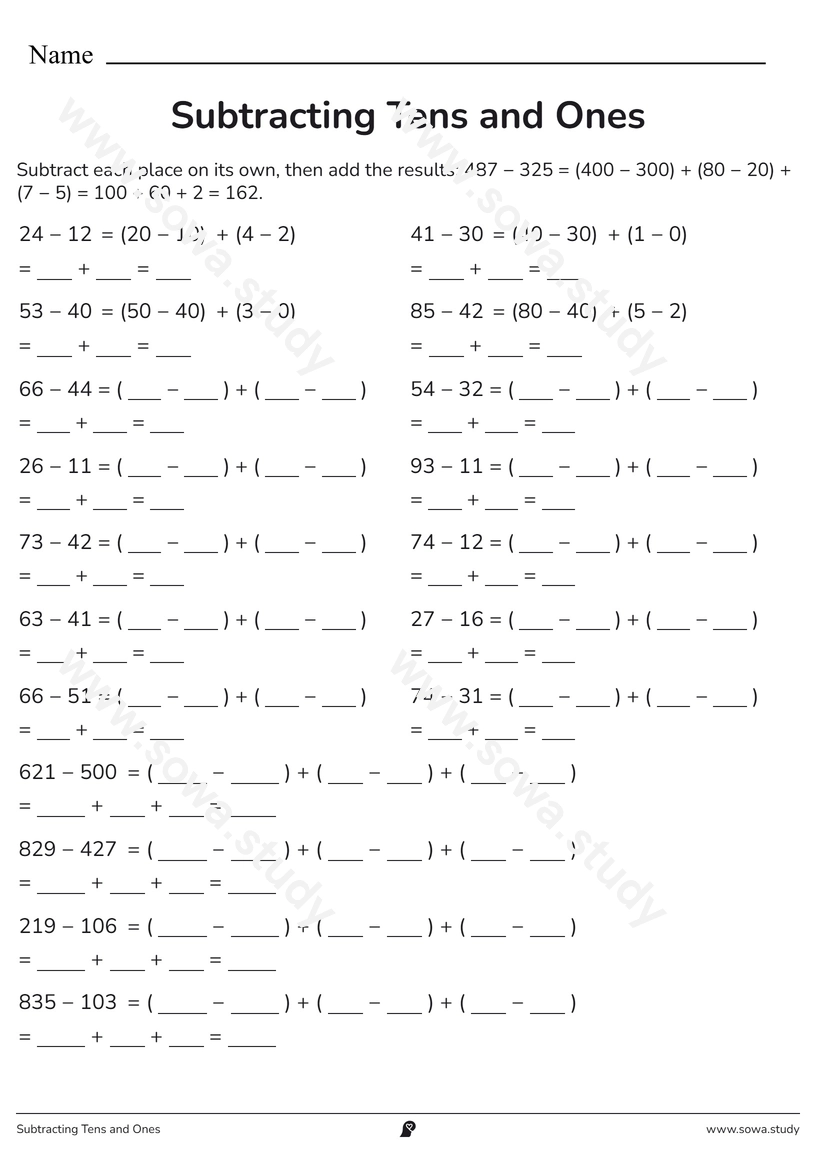
Subtract hundreds from hundreds, tens from tens, ones from ones:
487 − 325 = 162, because 400 − 300 = 100, 80 − 20 = 60 and 7 − 5 = 2.
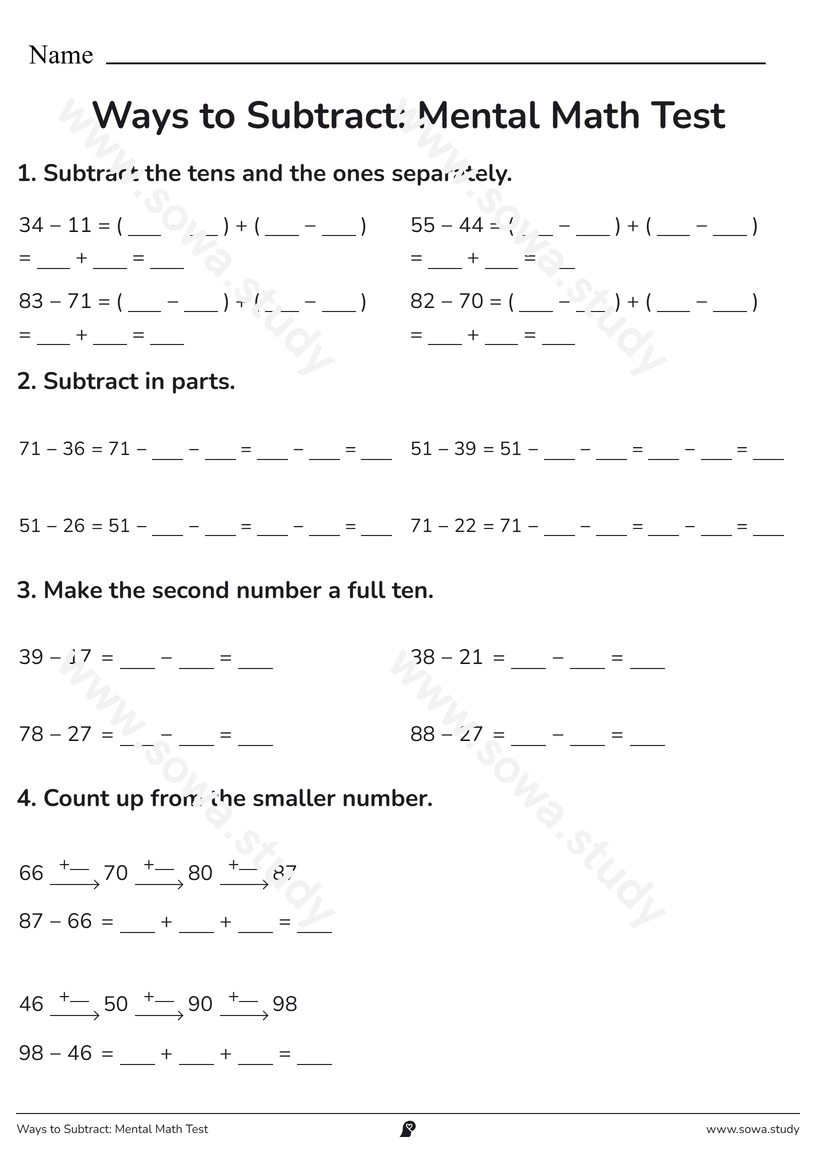
This works only when every digit of the second number is smaller than the digit above it. Practise it with Subtracting Tens and Ones, where that is always true.
The most common mistake
Look at 75 − 58. Tens: 70 − 50 = 20. Ones: 5 − 8… doesn't work. Children then often write 20 − 13 = 7, or swap the digits and get 23. The right answer is 17, because 20 + (5 − 8) = 20 − 3. The same happens with 184 − 97. If you see this on a test, the cure isn't more of the same strategy: it's knowing when to switch to one of the three below.
2. In parts
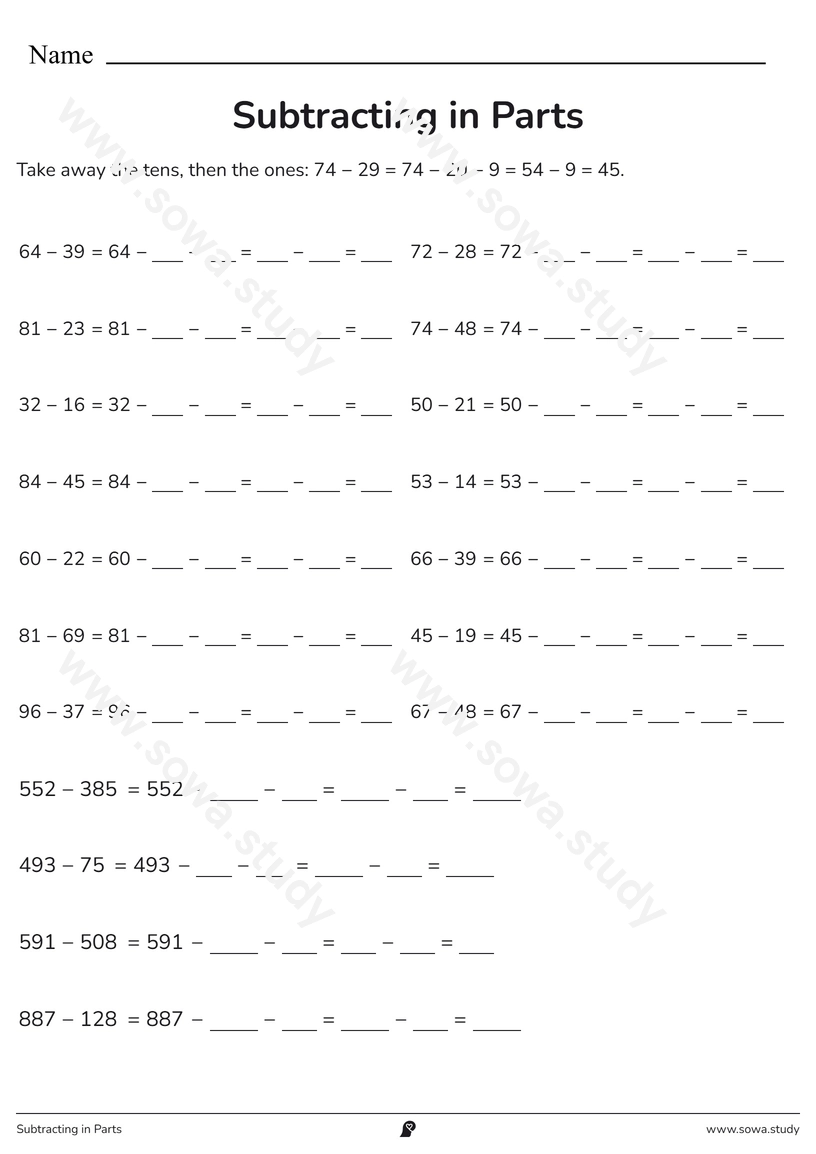
Take away the tens first, then the ones, and split the ones at the full ten if needed:
74 − 29 = 74 − 20 − 9 = 54 − 9 = 45 (54 − 4 − 5 = 50 − 5)
This always works, whatever the digits. Practise it with Subtracting in Parts: every problem has more ones in the second number, so the last step crosses a ten.
3. Adding on
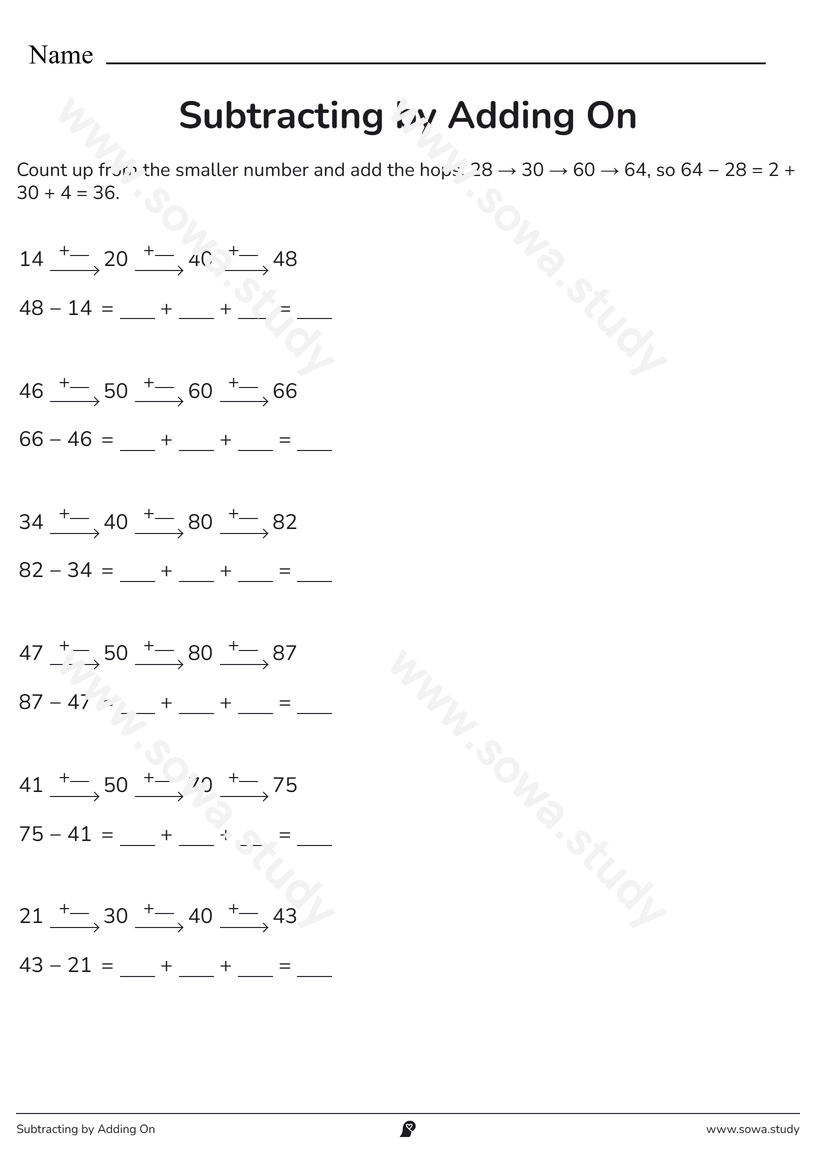
Count up from the smaller number to the bigger one, the way change is counted in a shop:
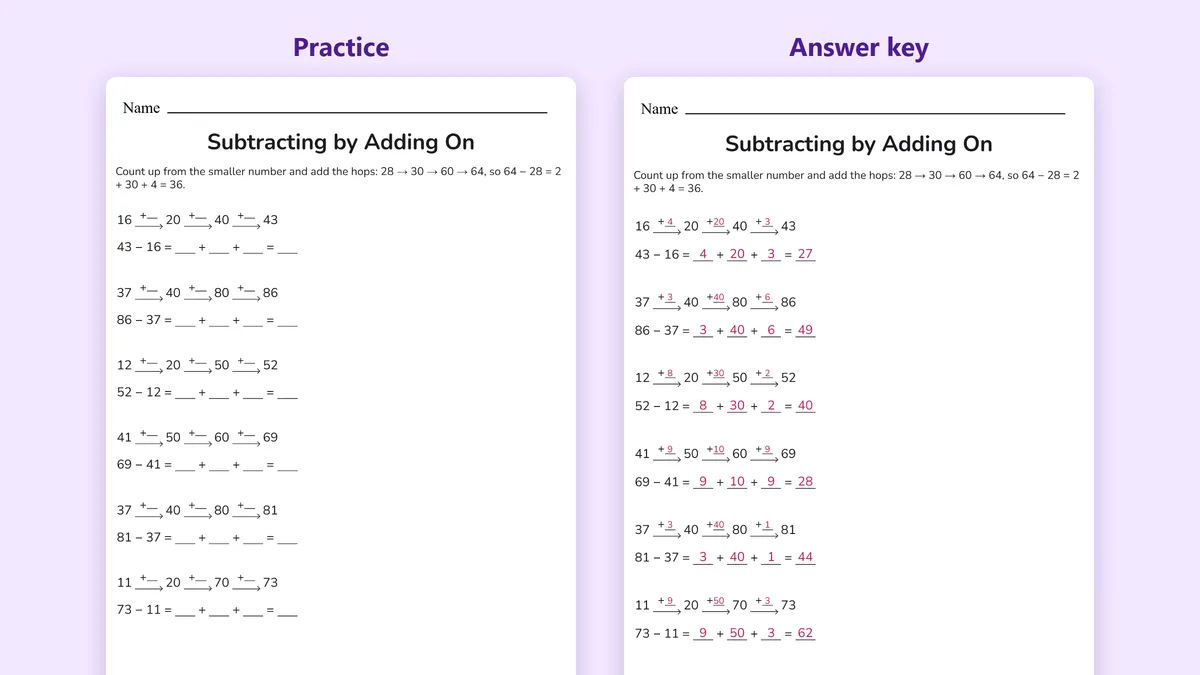
64 − 28: 28 → 30 (+2) → 60 (+30) → 64 (+4), so the difference is 2 + 30 + 4 = 36.
It's the easiest strategy when the numbers are close (82 − 79) or the first one is round (100 − 63). On Subtracting by Adding On the hops are drawn as arrows.
4. Same difference
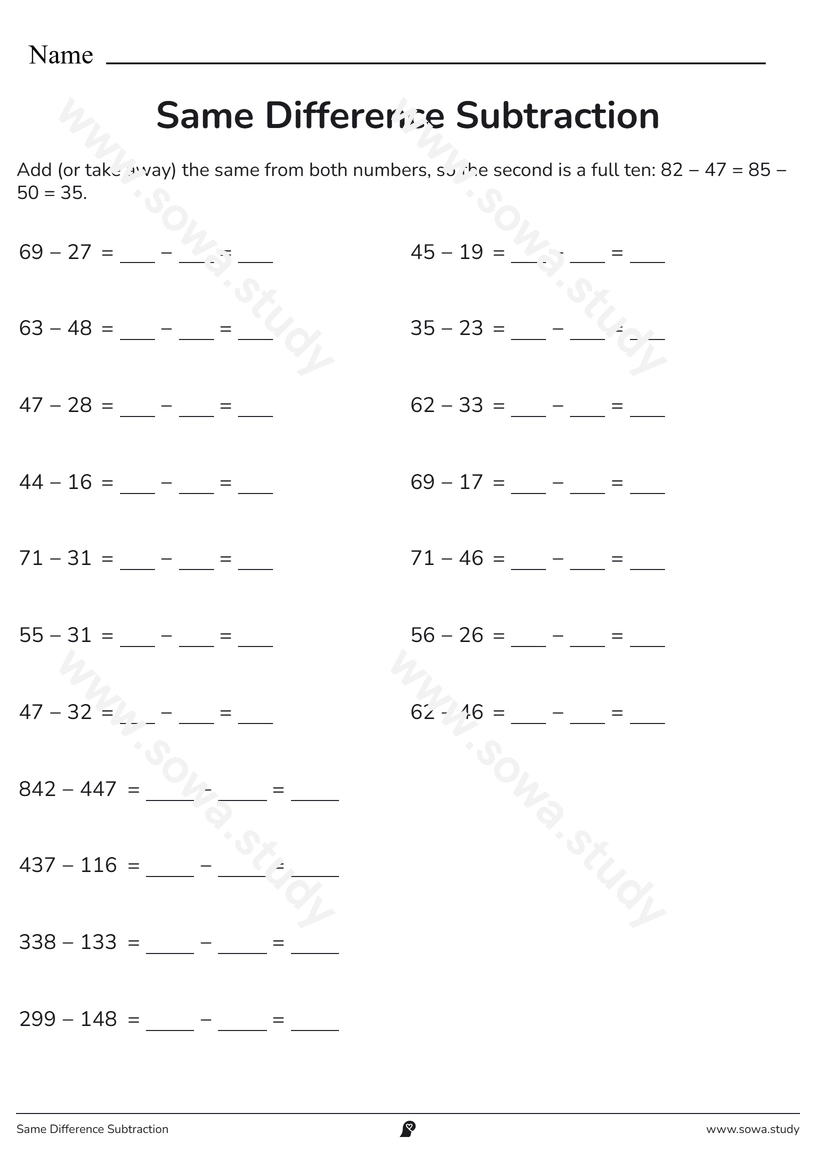
Move both numbers by the same amount, so the second becomes a full ten. The gap between them doesn't change:
82 − 47 = 85 − 50 = 35 (both +3)
That turns the tricky ones from earlier into easy ones: 75 − 58 = 77 − 60 = 17, and 184 − 97 = 187 − 100 = 87. Practise it with Same Difference Subtraction.
Which strategy when?
- Every digit of the second number is smaller: tens and ones separately.
- The second number ends in 7, 8 or 9: same difference.
- The numbers are close, or the first is round: adding on.
- Not sure: in parts, which always works.
How to practise
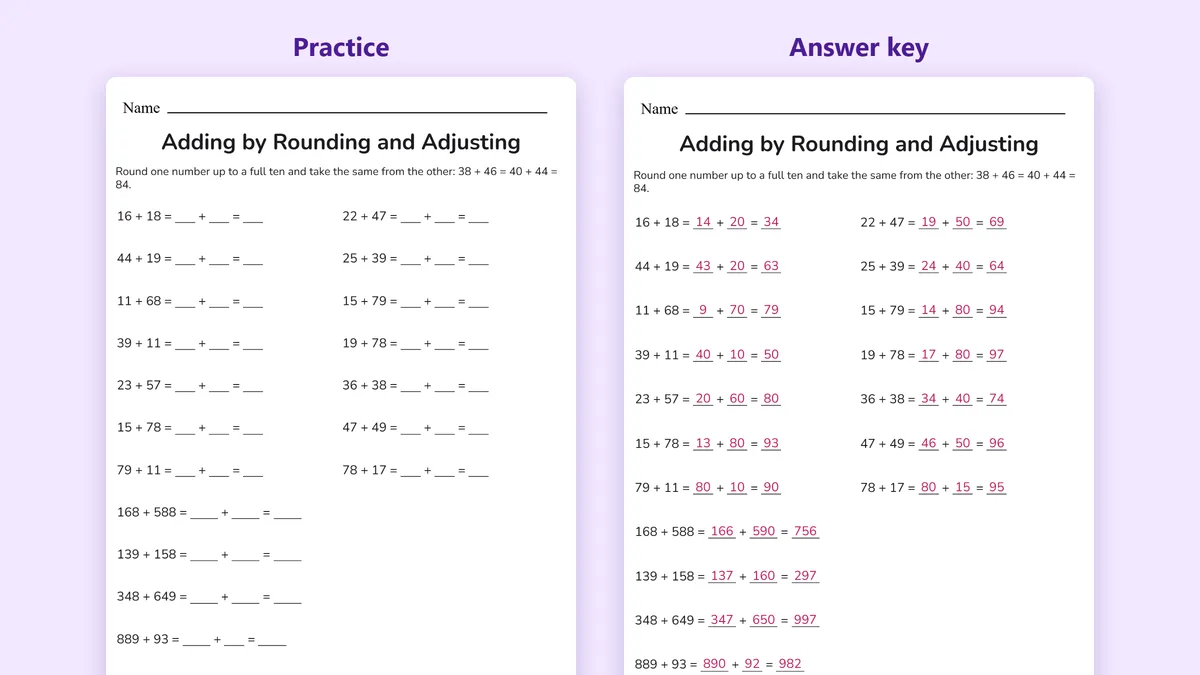
One strategy a day, then Ways to Subtract: Mental Math Test, where in task 5 your child picks the strategy. Every sheet prints the steps with blanks, and the answer key fills in each step, so you can see which step went wrong, not only that the answer did. Have your child check each answer by adding. Find more practice on the subtraction worksheets page.