Different ways to add: 3 mental math strategies with printable worksheets
From second grade on, children learn more than one way to add two-digit numbers in their head. Textbooks show the strategies side by side, and tests ask to "add in the easiest way". A child who knows three strategies, and can tell which one suits a problem, adds faster and makes fewer mistakes than one who always does the same thing.
First, the words
In 5 + 9 = 14, the numbers 5 and 9 are addends and 14 is the sum. Two facts make every strategy below work: numbers can be added in any order (1 + 2 + 9 = 1 + 9 + 2 = 12), and adding 0 changes nothing (87 + 0 = 87).
1. Tens and ones separately
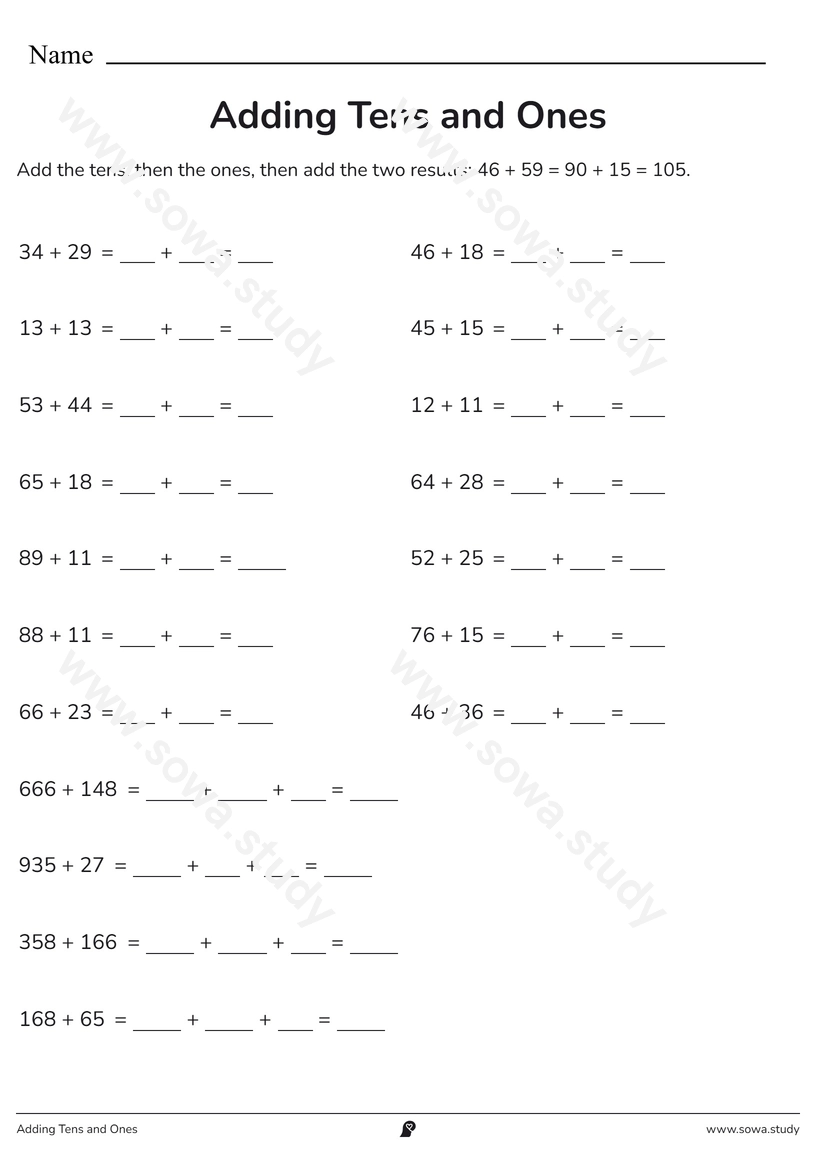
Add the tens together, the ones together, then put the two results together:
46 + 59 = 90 + 15 = 105, because 40 + 50 = 90 and 6 + 9 = 15.
It works for any two numbers and is the mental version of column addition, so it's the best one to learn first. With three-digit numbers, add the hundreds first: 836 + 117 = 900 + 40 + 13 = 953. The hard part is holding two results in your head; at first, let your child write them down. Practise with Adding Tens and Ones.
2. Making a full ten
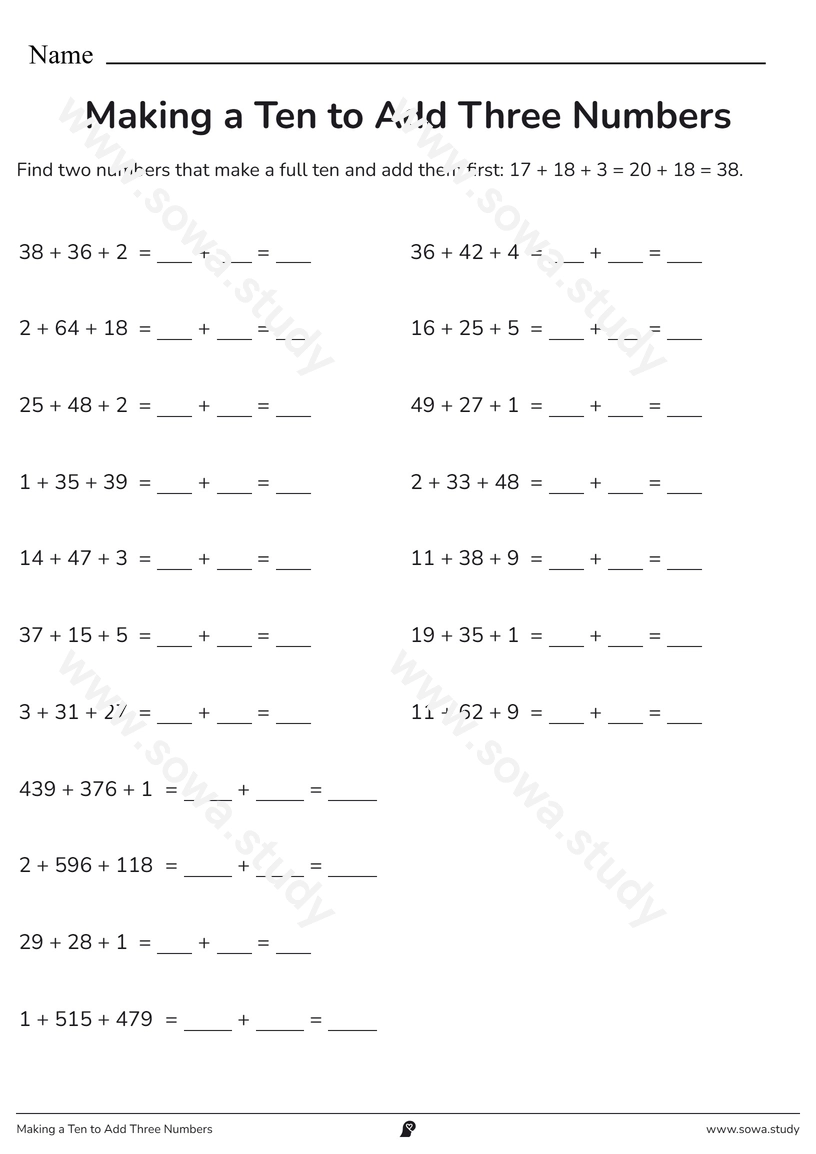
With three or more numbers, look for two whose ones make 10 (7 and 3, 6 and 4, 5 and 5) and add those first:
17 + 18 + 3 = 20 + 18 = 38
The pair doesn't have to sit next to each other, because the order doesn't matter. On our sheet Making a Ten to Add Three Numbers it never does, so your child has to spot it.
3. Rounding and adjusting
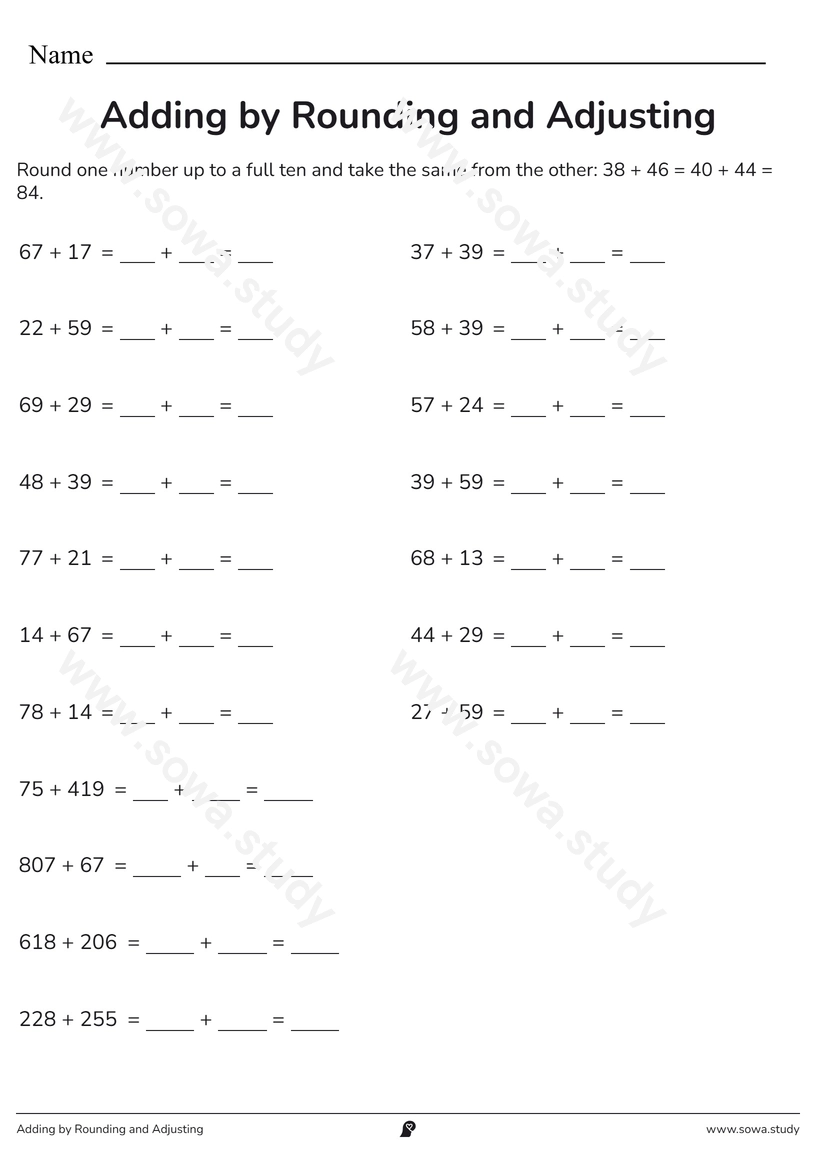
When one number is close to a full ten, round it up and take the same amount from the other number:
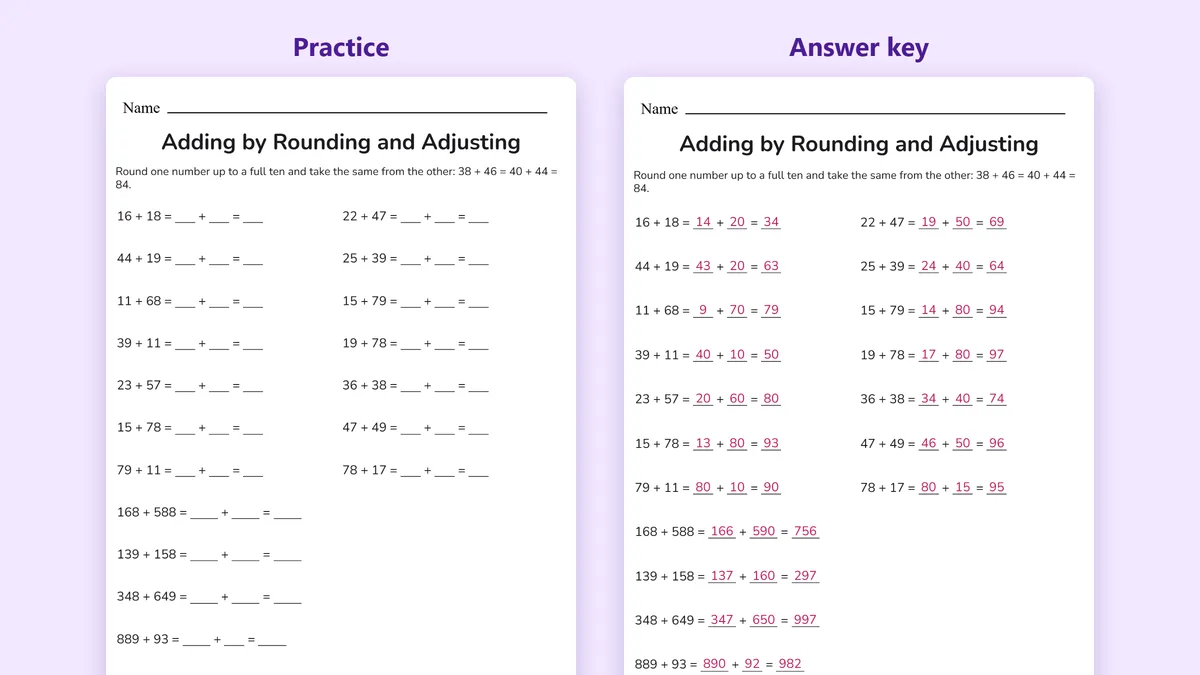
38 + 46 = 40 + 44 = 84 (38 gets 2 more, 46 gets 2 less)
You can also go the other way: 38 + 46 = 34 + 50. The sum stays the same because what one number gains, the other loses. This is the quickest strategy for numbers ending in 7, 8 or 9: 99 + 47 = 100 + 46 = 146. Practise it with Adding by Rounding and Adjusting.
Which strategy when?
- One number ends in 7, 8 or 9: round and adjust.
- Three numbers, and two of the ones make 10: make a ten first.
- Anything else: tens and ones separately.
How to practise
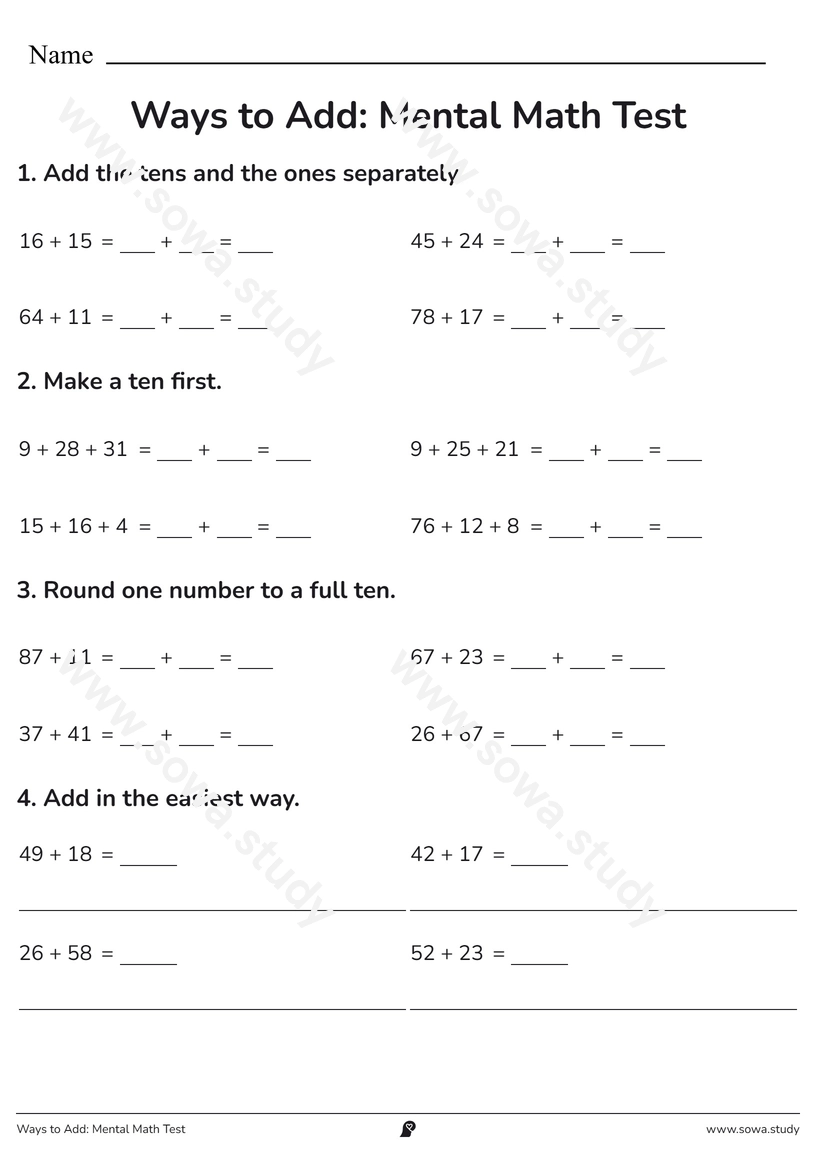
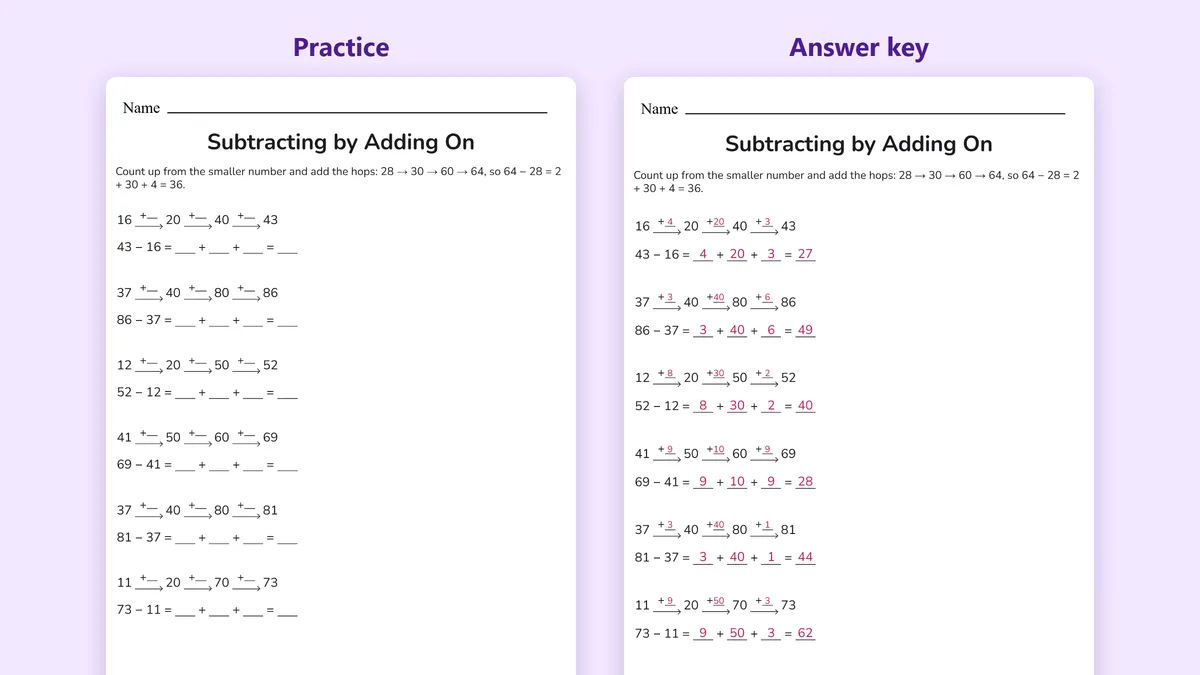
Take one strategy a day. Our sheets print each problem with its steps and blanks, like 38 + 46 = __ + __ = __, so your child practises the strategy and not only the answer. Every print has new problems, and the answer key fills in every step, so you can see exactly where a mistake happened. After the three sheets, try Ways to Add: Mental Math Test. In its fourth task your child picks a strategy on their own: ask them why they chose it. Subtraction has its own strategies, with sheets in the same style. Find more practice on the addition worksheets page.